“Alcohol wasn’t really a thing when I was growing up. My parents only drank an occasional sherry or half lager on special occasions and from my teens I was taking medication for epilepsy which meant I couldn’t drink — if I did I increased my risk of a seizure.
So my first encounter with alcohol as a destructive force was a real shock, one that left me quite literally scarred for life.
To be fair it’s not a big scar — about two inches long at the top of my right thigh.
That was the side the car hit me in the college car park.
I had just come out of the college welcome disco with my friends and was looking for my Dad’s car for my lift home.
From nowhere a car sped towards us and, uncomfortable in heels, I was unable to run fast enough to get out of the way. I remember rolling on to and then back off the car bonnet before watching its tail-lights as they disappeared into the dark.
Turns out the driver was a fellow student a couple of years older than myself who had a few drinks and thought he would still be okay to drive home. Since he didn’t stop he never got charged with drink-driving. When he was tracked down he claimed he only had a couple of drinks and would have been under the limit.
Maybe he was, who knows?
Today, if I’m driving I won’t have a drink — not even one. Legally I could have a small wine or a gin and tonic, but I know my brain isn’t functioning at its full capacity after that first drink so it’s just not worth the risk.
I don’t want to scar anyone else’s life.”
Do You Know If You Are Over The Limit?
Dumbarton Area Council on Alcohol provides information on the Chief Medical Officer’s low risk drinking guidelines and unit measures.
Call 01389 731456 or 0141 9520881 or pop into our offices at Westbridgend Lodge, Westbridgend, Dumbarton G82 4AD or 82 Dumbarton Road, Clydebank G81 1UG.
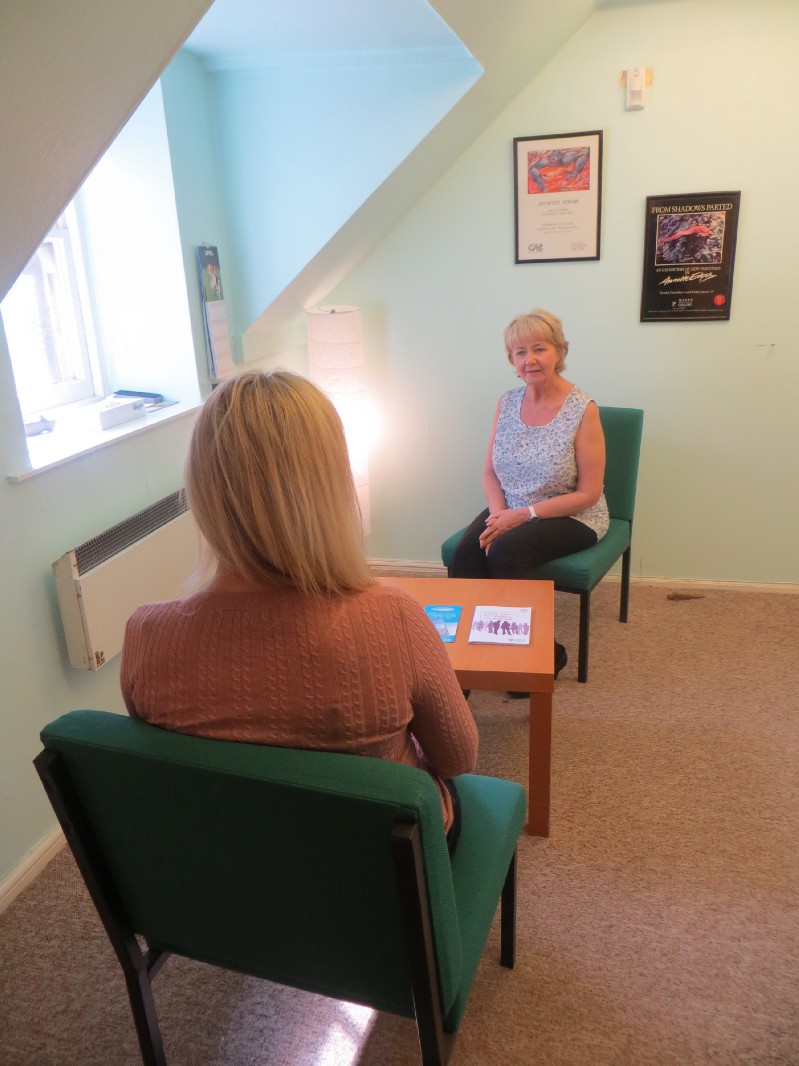
It’s good to talk: DACA’s alcohol counsellors are on hand to provide support if you need it.
“Growing up, I would have sooner sewn my own mouth closed than tell anyone that my daddy was a drinker.
I thought it was shameful, something to keep within the family — because I always heard the adults — usually my aunties and my mum — talking about it in hushed tones. It was never openly discussed with me, and I never felt it was my right to ask.
I was only five when my dad moved out of the house, but even at that age I could tell that this event brought some relief to my mum as well as sadness and hardship.
Throughout all my childhood, I never told a single soul about my dad’s drinking; not a teacher, not a priest, not even a best friend.
I suspect a lot of people knew because in a small town like this, that sort of thing is hard to keep quiet, but denial and obfuscation became my skillset.
I didn’t know what to think about my dad; there were so many conflicting emotions swirling around in me, and I couldn’t settle on an overriding one. So how could I speak to anyone else about him?
I was 14 when my dad died. His death certificate said the cause of death was ‘ischemic heart disease’ but it was the drink that killed him.
I was resentful for a very long time about losing my dad, and I carried it all, silently, inside me.
It wasn’t until I started working with people who were struggling with alcohol misuse disorder that I started to heal.
I’m now in a position to see that the way my family dealt with our situation wasn’t healthy. I had no opportunity to ask all the questions that plagued my thoughts; to vent, to cry, to share emotions and feel solidarity with my brothers.
It’s so important to talk and get things out in the open.
There’s nothing shameful about asking for help.”
Did You Know?
Dumbarton Area Council on Alcohol provides support for family members affected by a loved one’s drinking.
Call 01389 731456 or 0141 9520881 or pop into our office at Westbridgend Lodge, Westbridgend, Dumbarton G82 4AD 82 Dumbarton Road, Clydebank G81 1UG.
DACA’s one-to-one counselling can help you find light at the end of the tunnel.
“Ten years ago I realised my relationship with alcohol had changed from having one too many on a night out, to sneaking up to the local Spar to buy a carryout at times when I was least likely to meet someone I knew.
I had become totally withdrawn, a nervous wreck. I would then sit in my flat alone, drinking and feeling sorry for myself.
This pattern continued for the last 18 months of what I now call my ‘drinking to escape myself’ period.
Most folk who know me now would see me as a sociable, out-going person that maybe talks too much sometimes (they have a point). However, back then, that was not the case, I had lost all confidence in myself and life. I saw myself as one of life’s losers.
Although I did not know it at the time, as I thought I was just another ‘alky’, I was drinking copious amounts of alcohol to escape from myself and my ever increasing negative outlook.
One morning, after another stealth mission to the Spar, instead of getting tore into the eight cans of Stella as soon as I got back to my flat, something clicked in my mind.
For hours I sat and stared at the cans, with a mantra just repeating itself over and over in my head ‘this has to stop, one way or another, you can’t go on existing like this.’ I’m not afraid to say I cried my eyes out.
I now believe my body was telling me it had had enough, both physically and emotionally, what I have now come to know as hitting my own personal rock-bottom.
Instead of drinking those cans of Stella, I emptied each one of them down the sink, with each of them draining away, reaffirming my decision that I wanted to reclaim my life back.
Initially I attended AA meetings to help me with my alcohol cessation and, to be honest, to get me out the flat. Sitting alone without drink to ‘help’ me escape was a whole new set of horrors.
However, it did not take me too long to realise that I was not an alcoholic, I’m not saying drink was not a problem, obviously it was, I began to realise that turning to alcohol was a symptom of what was really happening with me; depression which in turn had led to a complete lack of self-esteem, leaving me with no sense of self-worth and no confidence whatsoever.
I knew I had to get my head sorted and over time, thankfully I have achieved that to a point where I have begun to like myself again. To me that was a major achievement as I hated who I had become back then.
For seven years I did not consume one drop of alcohol, I’m convinced I would not still be on this planet if I had done. Now though, I have a ‘normal’ relationship with drink. I do enjoy the odd beer or two, never to excess though.
My life has completely turned round from those dark days ten years ago, now the future seems to be full of endless possibilities as opposed to the vision of a dark tunnel I was staring down back then.”
Did You Know?
Dumbarton Area Council on Alcohol provides 1–1 counselling support, groups and activities to help reach your drinking goal — you set the goal and choose what works for you.
Call 01389 731456 or 0141 9520881 or pop into our offices at Westbridgend Lodge, Westbridgend, Dumbarton G82 4AD or 82 Dumbarton Road, Clydebank G81 1UG.
We’ll be in Clydebank Leisure Centre today, November 14 from 10am — 3pm with some therapy tasters, info & advice.
Soclalising and making friends: DACA’s groups are all alcohol-free and encourage people to grow and flourish without having alcohol as a prop.
“I’m not naturally outgoing and I’ve always found social events and groups to be quite daunting. When I was at university, I started having a few drinks before going out in the evening, which I believed took the edge off my social anxiety, and helped me to be more chatty and fun in company.
I thought that alcohol made me a better version of myself — a social butterfly, or the life and soul of the party.
There was a trade-off though.
I nearly always felt unwell the next day and quite often had a nagging sense of regret over some of the choices I made when I was drunk.
I remember one time I came home very late at night and woke up my elderly neighbour by singing and shouting in the close with my friends. I thought it was harmless at the time — just having a laugh — but a few days later my neighbour told me that she’d been really frightened by all the commotion. I was horrified.
Then a few years ago, I saw a video from a wedding party I’d been at, and it really made me re-evaluate the effects of my drinking. I’d been tipsy at this wedding, but not ‘falling down’ drunk and I thought I’d been on top form.
But the video showed an obnoxious lout, making crass, insensitive remarks and loudly mocking people. I knew it was me, but it was like looking at a stranger. I also saw the faces of my relatives, including the bride, looking embarrassed and disappointed at my behaviour.
That’s when I decided to change.
I didn’t drink alcohol at all for nearly two years after that, and I felt so much better for it. I still felt a bit anxious in social groups, but I reassured myself with the knowledge that I was fully in control of how I presented myself and what I did. That became more important to me than seeming naturally confident.
I’ve had a few occasions in the last year or so where I’ve had an alcohol drink — but I’ve always limited myself to one. I don’t ever want to be that version of myself that I saw on the wedding video.
That’s not the real me.”
Did You Know?
Dumbarton Area Council on Alcohol provides 1–1 counselling support, groups and activities to help reach your drinking goal — you set the goal and choose what works for you.
Call 01389 731456 or 0141 9520881 or pop into our offices at Westbridgend Lodge, Westbridgend, Dumbarton G82 4AD or 82 Dumbarton Road, Clydebank G81 1UG.
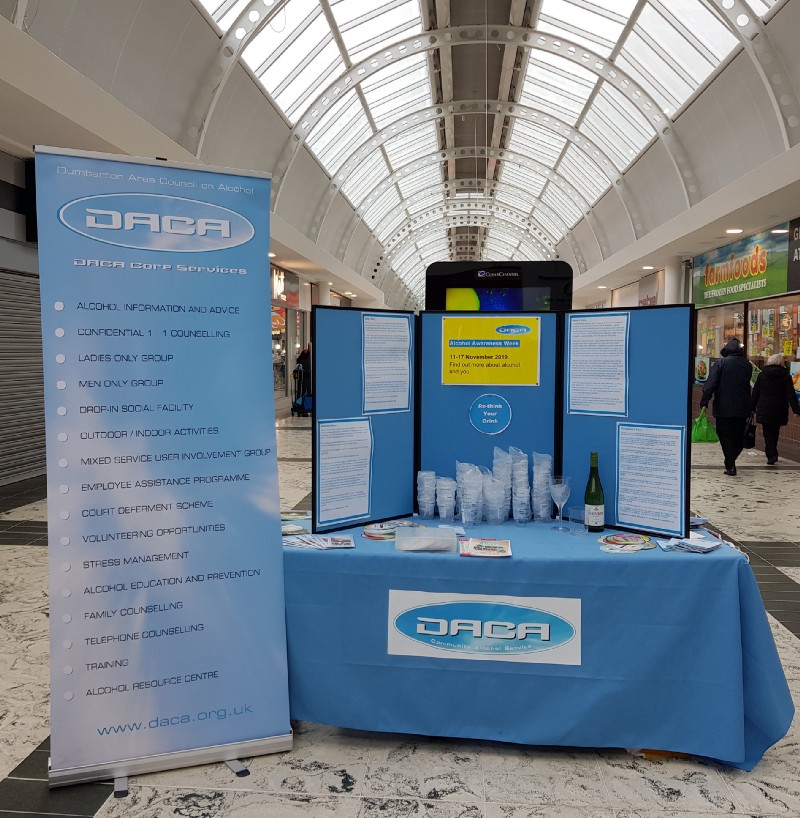
We’re hosting a series of pop-up events across Clydebank and Dumbarton to talk to people about the impact of alcohol on their lives.
We will have a stall in Clydebank shopping centre and Clyde Shop Mobility on Monday November 11, Clydebank Health Centre on Tuesday November 12 and the Chest, Heart & Stroke community hub in Dumbarton Town Centre on Wednesday November 13.
We’re also hosting a larger event in Clydebank Leisure Centre on November 14 which will include therapy tasters, quizzes and information stalls.
The events are part of the national Alcohol Awareness Week, which this year focuses on the impact alcohol has on our bodies, our lives and our loves.
Our Chief Executive Officer, Mags Mackenzie, explained: “Alcohol is part of our culture — almost our national identity, so it can make it difficult for people to recognise when it is having a negative impact on their lives.
“You don’t need to be a problem drinker for alcohol to cause problems in your life. It can affect your health, your family, your work and you might not be aware of the scale of the impact.
“We’ll be out and about with our alcohol awareness pop-up stalls chatting to people about low risk guidelines and sharing tips and ideas on how to reduce drinking levels.”
Although alcohol is associated with socialising and relaxation it is in fact a depressant, so our Steps to Well-being team will be joining some of the pop-up sessions to offer therapeutic tasters as a healthy alternative to booze.
Mags added: “A lot of people will pour a couple of glasses of wine or have a few beers when they go home from work to de-stress and relax. They don’t see that as a problem. But if you’re doing this most nights and perhaps socialising with friends at the weekend it all adds up.
“Alcohol is linked to over 60 medical conditions including at least six forms of cancer and anything over a bottle of wine or five pints of normal strength beer a week is above the government’s low risk drinking guidelines.
“Our Steps to Well-being team provide a range of complementary therapies. They have been offering this service to people accessing support at DACA for nearly a year and the benefits it has both on drinking and overall well-being are significant.
“So if you want to have a chat about your drinking or that of a loved one please come along to one of our events and tell us about alcohol and you.”
For more information call 01389 731456 or 0141 9520881 or pop into our offices at Westbridgend Lodge in Dumbarton and 82 Dumbarton Road in Clydebank.
After 43 years of working in West Dunbartonshire, there are few local charities with the organisational memory, knowledge and experience which Dumbarton Area Council on Alcohol (DACA) can bring to the community.
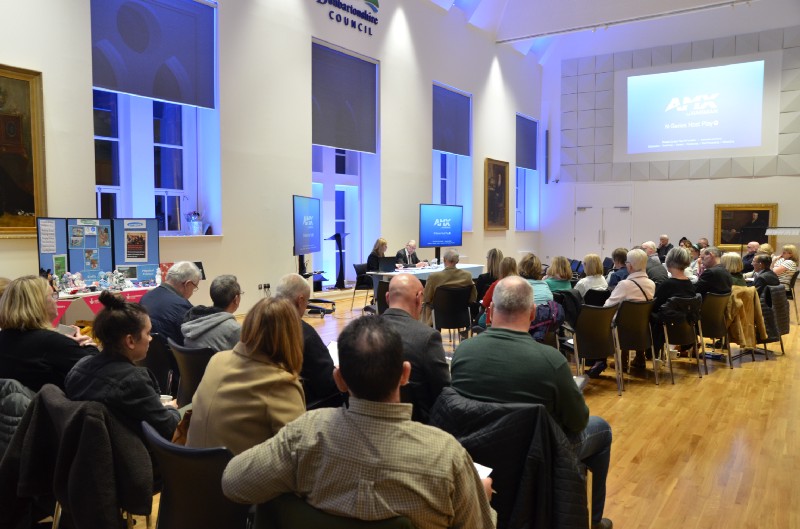
Our AGMs are always a timely reminder of this as we welcome back past and present clients, colleagues, volunteers, Board members, partners and funders.
DACA’s AGM at Dumbarton Burgh Hall on Tuesday October 22nd 2019
This year was an opportunity to reflect on both the successes and challenges we have encountered in 2018 and share some of our plans for the future.
One of the biggest hurdles we face at present is the number of people who are referred to the service but don’t make it in to attend an appointment. This isn’t a new problem; we’ve always been challenged by this. But our budgets are tighter and our services are busier, and we’re really feeling the impact of missed appointments at the moment.
So we’ve put in place several measures to try and address this, including our new START service. This provides a rapid triage response to anyone seeking support with their drinking, which allows us to ‘strike while the iron is hot’ and get people appointed very quickly.
We’re also directing people to our Open Social Drop-ins — including our Wednesday evening Supper Club in Dumbarton. These groups are light touch and unbureaucratic, offering people support in a very gentle and unconditional way. People who use these groups can give as well as receive support and encouragement, meaning that the groups have become stand-alone recovery communities. Our team love being part of the development of these compassionate communities.
So with the combination of a swift professional response and regular peer support, we hope that accessing our services is becoming easier for anyone looking to reduce their drinking. And we hope we’ll see an increase in new people coming over our threshold in the coming year.
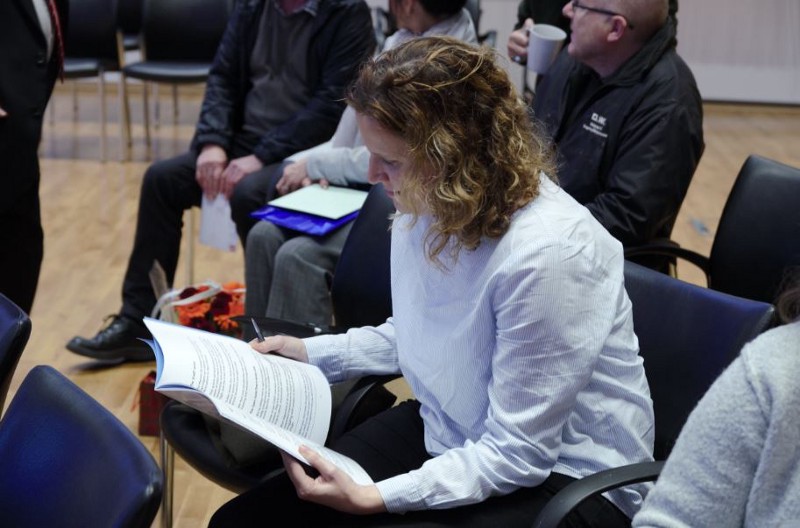
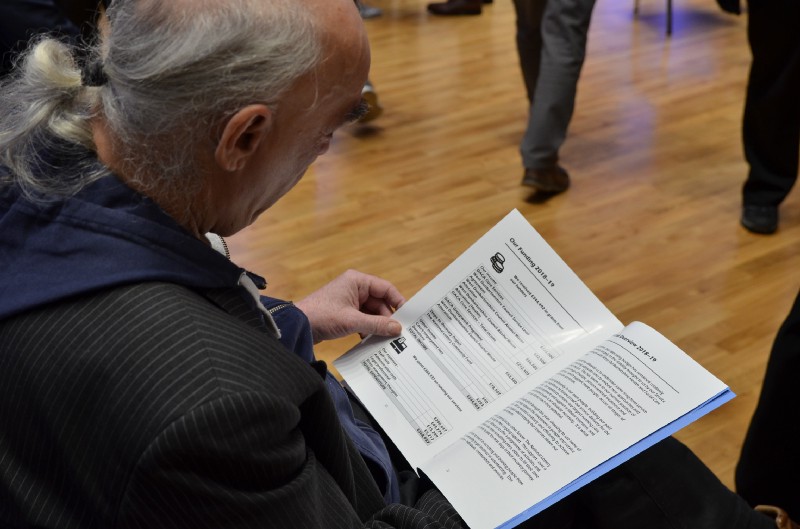
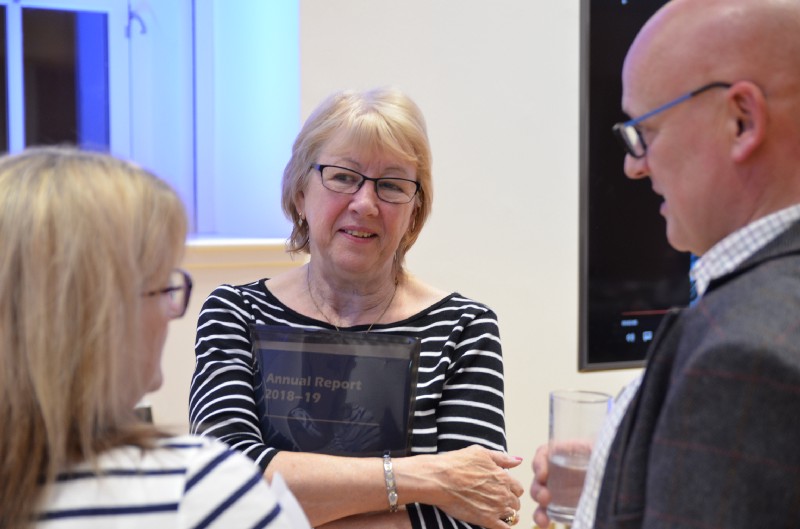
AGM guests reviewing our Annual Report
Every year at DACA, we support around 400 people in direct service provision, and, on average, around 80% of these people enjoy a positive outcome in their recovery goals.
But research shows that 1 in 4 people are drinking above the government’s low risk guidelines — in West Dunbartonshire that’s close to 20,000 adults.
There are also at least 3,600 people in our community who are alcohol-dependent or drinking at hazardous levels — and we are only seeing a fraction of them.
Despite delivering a service in Dumbarton since 1976 and in Clydebank from the early 1990s we know we need to raise the organisation’s profile to reach different audiences.
To this end we will be doing more community events and improving our digital and social media presence in the coming year. We will also be making our Clydebank office more physically accessible.
We’ve always had a wide range of services for people to choose from because we recognise that no single approach will suit everyone when it comes to tackling alcohol problems. Now we’re adding in a range of engagement methods for the same reason. We hope that by using a mix of community events, word of mouth and digital/social media, we’ll open our doors to more people who need us.
Chairman David Wilson addressing the AGM guests
This year we introduced a new Steps to Wellbeing service. We have two therapists providing a range of complementary therapy treatments from both our Dumbarton and Clydebank offices every week. We pioneered this approach to tackling alcohol problems back in the 1990s but funding this service has been an ongoing challenge.
We’re delighted that at the start of the year the Board agreed to fund a one-year pilot from our reserves and we will be monitoring its impact as the year progresses.
Our Steps to Recovery project, funded by the National Lottery Community Fund for five years completed its first full operational year offering a wide range of groups and activities from yoga to kayaking, craft-making to creative writing.
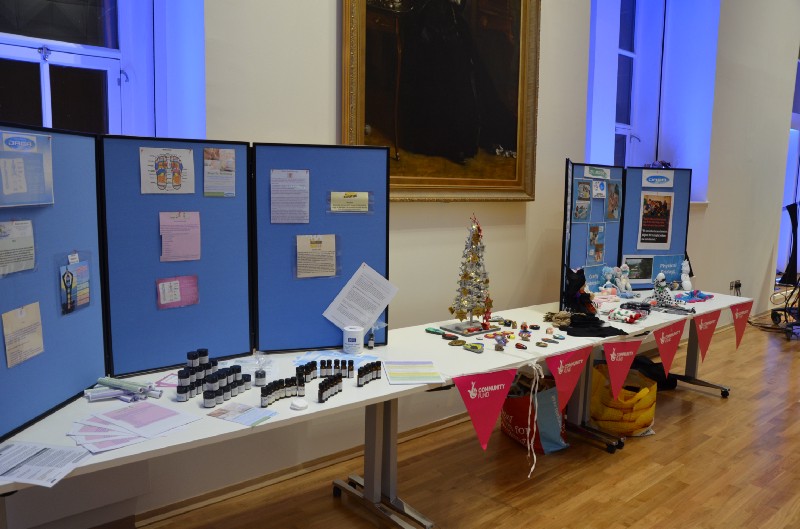
Our clients’ Arts and Crafts masterpieces on display
It was a pleasure to showcase some of our clients’ creative talents at the AGM, and craftwork also made a perfect leaving gift for Julie Lusk, the Head of Service for Addictions in West Dunbartonshire Health and Social Care Partnership, who we said goodbye to at the AGM as she moves on to a new career challenge in another locale.
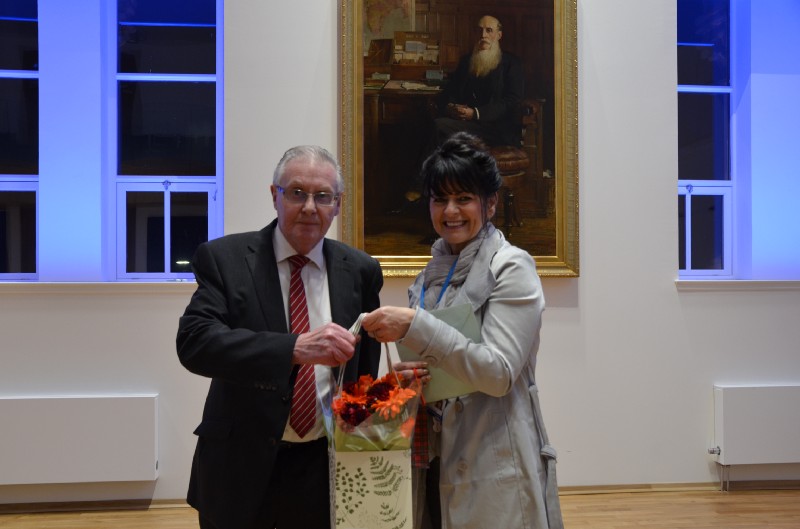
At the end of the meeting, our chairman David Wilson presented some of our clients’ handiwork, along with a bunch of flowers to Julie who has been a good friend of DACA over the years and will be greatly missed.
Chairman David Wilson presents a gift to Julie Lusk, Head of Addictions, Mental Health and Learning Disability, West Dunbartonshire CHCP
Digital copies of our annual report are available to download from www.daca.org.uk or contact us on 01389 731456 if you would prefer a print version to be sent to you.
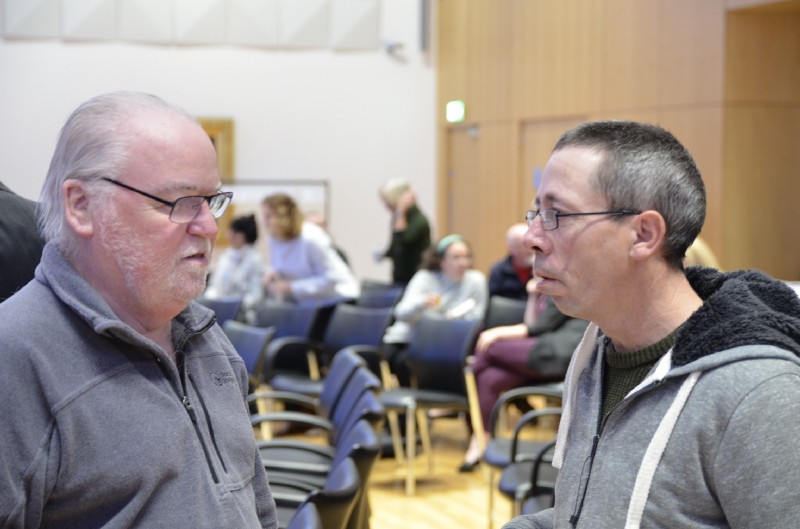
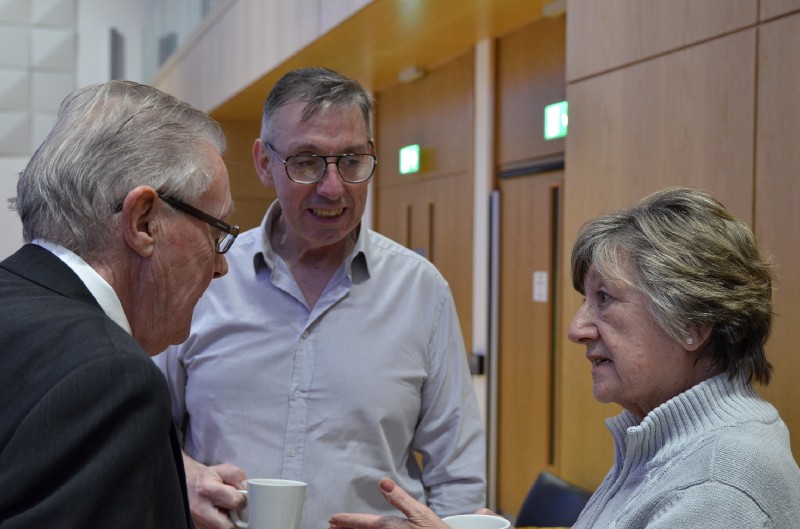
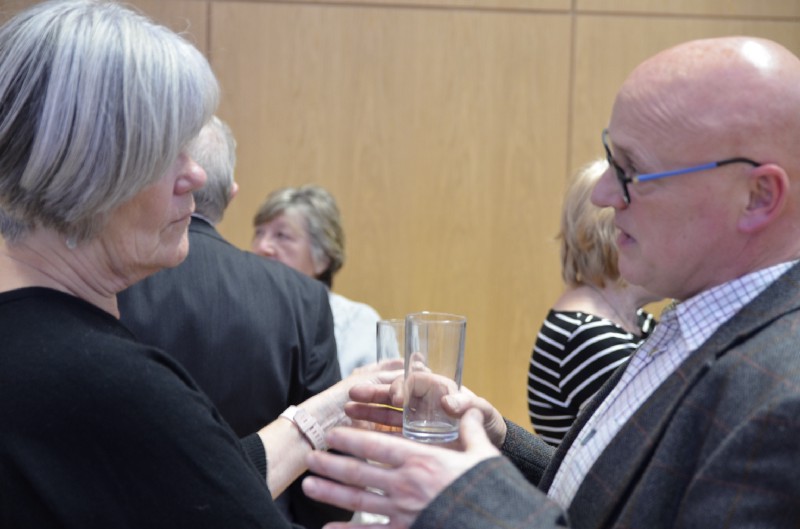
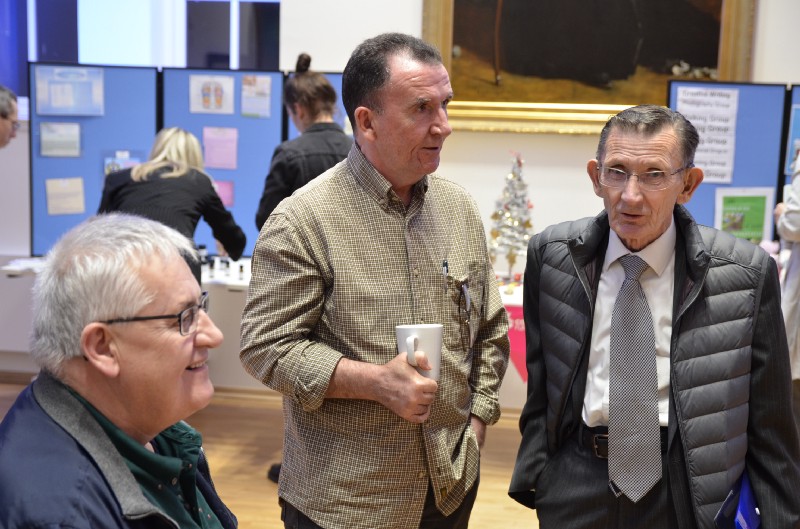
AGM guest reviewing the Annual ReportAGM guests networkingAGM guests networkingAGM guests networkingAGM guests networkingJohn Dalrymple from DACA’s Executive Committee (right) networking with guestsAGM guests networking






 Dumbarton Area Council on Alcohol